Contents
- Key takeaways
- The false choice a lot of founders get pushed into
- Why that gap matters more than it seems
- What to actually launch with versus what can wait
- A website for startup founders: what actually helps at this stage
- Why an ongoing arrangement beats a pure one-off
- What actually makes sense to ask before committing to anyone
- Frequently asked questions
A website for startup founders needs to do one job above all: actually get the idea seen. Most startups don't fail because the idea was bad. A surprising number fail because nobody ever really saw the idea in the first place, and a weak website is one of the quieter reasons why.
Key takeaways
- A website that fails to build trust doesn't fail loudly, it shows up as fewer enquiries and longer sales cycles nobody traces back to the site.
- A fixed, upfront quote matters more at this stage than at any other, since cash flow is tighter and less predictable.
- A site built to be added to beats one you'll have outgrown within six months.
- Ongoing support tends to cost less over time than treating launch as the finish line.
The false choice a lot of founders get pushed into
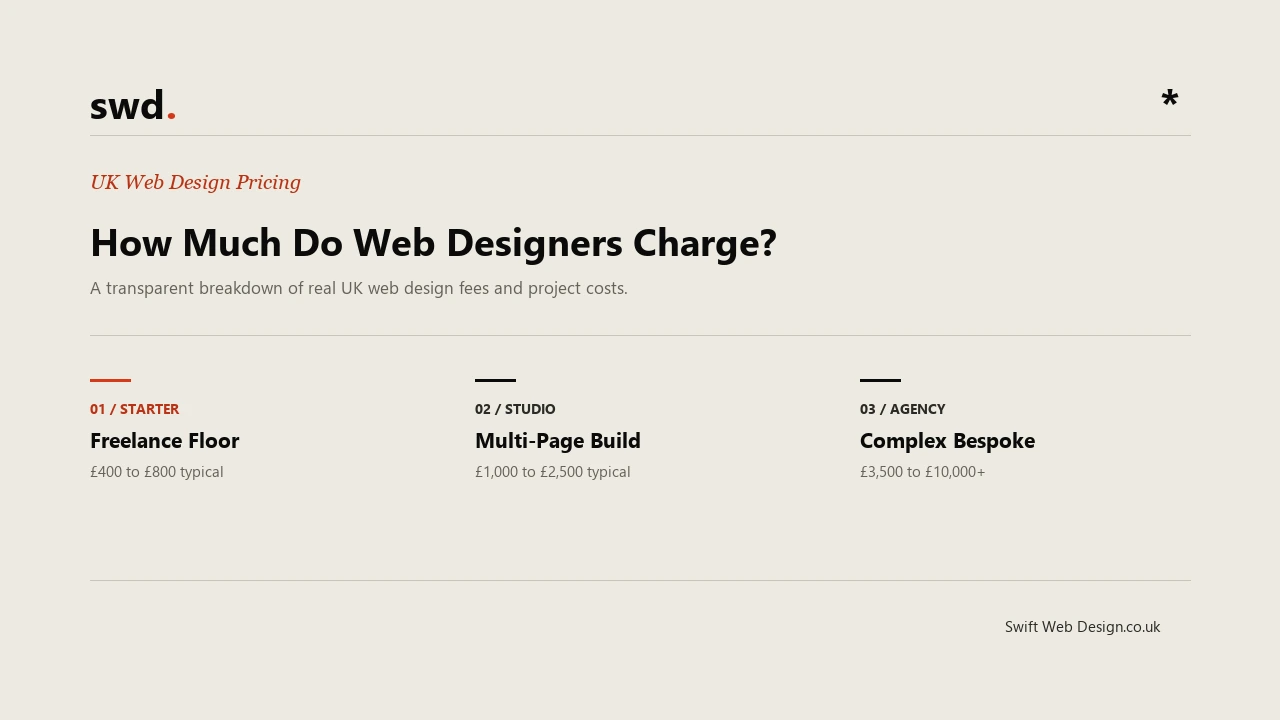
When it's time to get a website, the options often feel like two extremes. A full agency quote can run into thousands before you've made a single sale, once you add the "creative direction" and the add-ons. On the other side, a £3-a-month drag-and-drop builder feels safe, but it was built to sell subscriptions at scale, not to grow with a specific business, and it tends to show (our guide to affordable web design breaks down what you actually get at each price point).
Customers notice the difference faster than founders think. Mismatched fonts, a slow load, a missing security certificate, these register as a lack of credibility within seconds, and a visitor rarely tells you that's why they left. They just don't get in touch. The National Cyber Security Centre's small business guide is worth a look before launch, since a missing certificate is one of the fastest ways to lose a visitor's trust.
Some founders skip a website altogether and run purely on social media instead, which feels free but comes with the same reach problem any established business runs into eventually (our guide to why a website wins long term covers why that trade-off usually catches up with you).
Why that gap matters more than it seems
A website that fails to build trust doesn't fail loudly. It shows up as fewer enquiries, longer sales cycles, and opportunities you never find out you missed. It's easy to start questioning the product or the idea when the actual problem was the site representing it.
What to actually launch with versus what can wait
Early-stage founders often try to launch with everything a mature competitor has: a blog, case studies, a full FAQ, integrations nobody's asked for yet. Most of that can wait. What genuinely needs to be there on day one is a clear explanation of what the business does, who it's for, and an obvious way to get in touch or sign up. Everything else is worth adding once there's real evidence it's needed, not guessed at in advance.
A website for startup founders: what actually helps at this stage
A few things matter more for an early-stage business than for an established one:
- A fixed, upfront quote, not a scope that grows every time you ask a question, which matters more when cash flow is tight and unpredictable.
- Someone you can actually reach once the site is live, rather than a handover followed by silence.
- A site built to be added to, not one you'll have outgrown within six months because it was never meant to scale past a template.
Why an ongoing arrangement beats a pure one-off
A website isn't a single purchase the way a logo is. Software needs updating, security standards shift, and content quietly goes stale. A site built once and left alone doesn't stay finished, it just doesn't look unfinished yet. Some kind of ongoing support, whether that's a monthly plan or simply someone you can call when something needs changing, tends to cost less over time than treating a launch as the end of the project and paying to fix it properly later.
What actually makes sense to ask before committing to anyone
- Is the quote genuinely fixed, or will it grow once you're already committed?
- Is there a real person to talk to after launch, or does support mean a help centre?
- Can the site actually be extended later, or will growth mean starting again from scratch?
If those answers are clear and honest, whoever you're talking to, whether it's us or someone else, is worth taking seriously. A good website at this stage is one you won’t need to rebuild in a year, because it was built to grow with you from the start.
Frequently asked questions
Should a startup use a cheap builder to save money early on?
It can make sense for a genuinely early-stage idea with very tight cash flow, but it's worth being honest that a builder built to sell subscriptions at scale isn't built to grow with a specific business, and it tends to show to customers.
What matters more for a startup than an established business?
A fixed, upfront quote, a real person to contact after launch, and a site built to be added to rather than rebuilt from scratch in a year. Cash flow and unpredictability make all three matter more at this stage.
Is ongoing support really necessary for a new website?
Usually, yes. Software needs updating and content goes stale whether or not anyone's watching. Some kind of ongoing arrangement tends to cost less over time than treating launch as the finish line and fixing things properly later.
Need a website that works this hard?
We design fast, findable websites for UK small businesses. Clear pricing, no jargon.