Contents
- Key takeaways
- The two quotes that confuse every small business owner
- What you are actually paying for behind the scenes
- The hidden costs that make cheap websites expensive
- Where the honest floor sits for UK web design right now
- A plain answer: what to expect to pay for web design UK prices
- How to evaluate a web design quote before committing
If you ask three different UK web designers how much a small business website costs, you will almost certainly receive three incompatible answers. One freelancer offers to build your site for £250. An independent studio quotes £900 on a fixed project fee. A regional agency sends a proposal starting at £4,500 plus a monthly retainer. All three claim to deliver a professional, mobile-friendly website tailored to your business. This spread leaves owners baffled about which figure is real, and what affordable web design actually means when you strip away sales jargon.
Key takeaways
- A £250 site and a £3,000 site are different products built with different intentions, technical depth, and long-term ownership terms.
- Affordable does not mean rock bottom: true affordability balances fair upfront pricing with zero surprise renewal costs and full asset ownership.
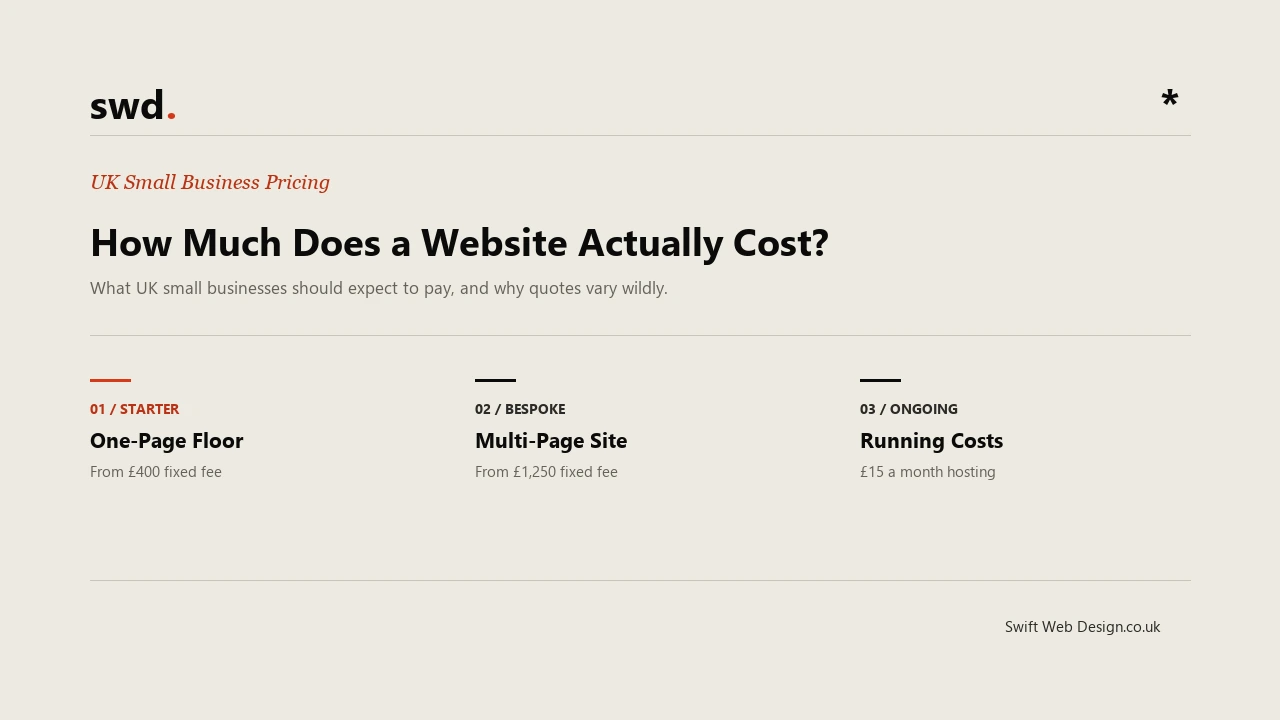
- The honest floor for a properly structured UK business site currently sits at £400 for a starter presence and £1,000 to £2,500 for a multi-page build.
- Evaluating quotes requires looking past the build fee to check hosting terms, plugin renewal licenses, revision limits, and who legally owns the domain.
The two quotes that confuse every small business owner
The pricing confusion in web design stems from a simple reality: two quotes with the exact same headline deliverables often describe completely different work. A quote for £300 usually buys an off-the-shelf theme downloaded from a marketplace. The developer installs the template, adds your logo, pastes your text into pre-existing demo boxes, and hands over a login. The setup takes six hours, relies on dozens of third-party plugins, and looks identical to thousands of other businesses.
A quote for £1,200 from an independent studio involves studying your local competitors, planning page structures to convert enquiries, bespoke layout styling, performance tuning, and technical SEO foundations. Both providers call their service web design, yet the end products share almost nothing in common. When searching for affordable site design, business owners assume they are comparing like-for-like services, only discovering the compromises once the site launches.
What you are actually paying for behind the scenes
To understand why quotes vary across the UK, you have to look at what happens behind the screen during a build. You are not paying for someone to click buttons in software; you are paying for technical competence, commercial clarity, and long-term asset security.
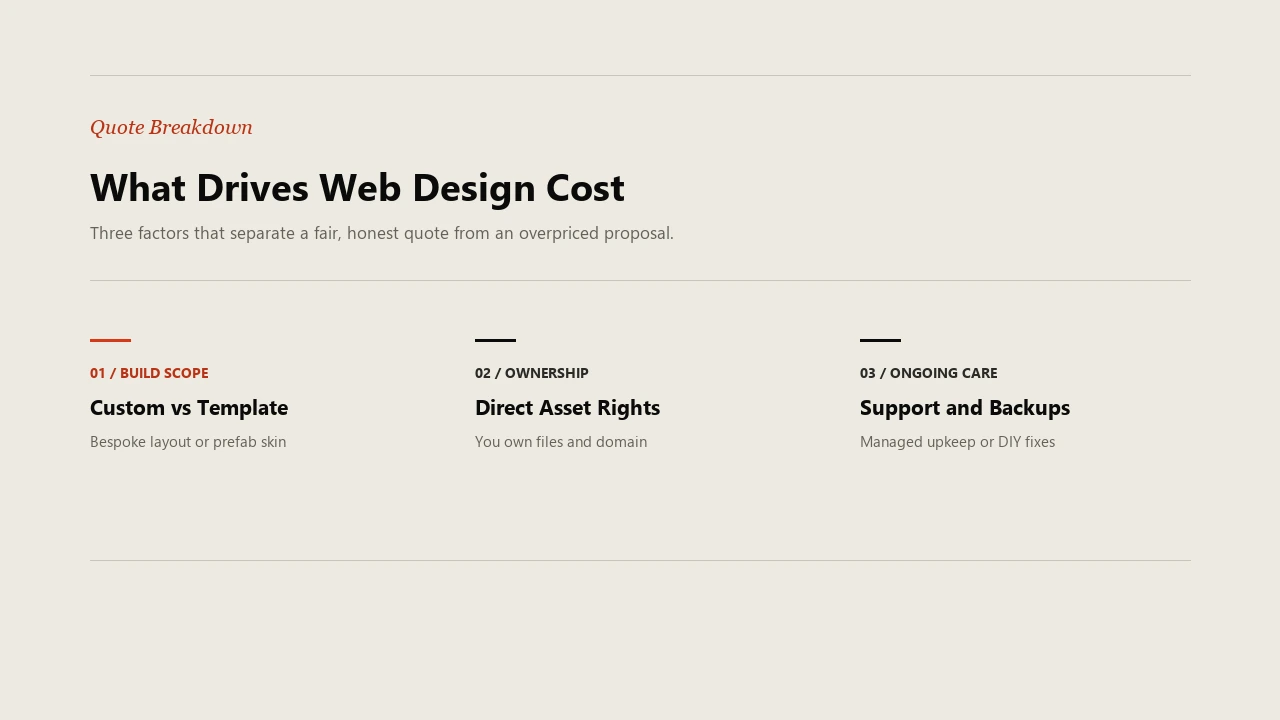
The first cost driver is build scope. A prefab template locks you into whatever layout the original theme author created. When you want to adjust columns, add custom enquiry steps, or adapt for mobile, the template resists. In contrast, tailored builds crafted around your specific services (the core focus of our website design and build services) ensure your content leads the design. Real-world project galleries, such as those across our client portfolio and examined in our Peak Plastering case study, require deliberate image framing and clear job context to win contracts, which rigid templates fail to deliver.
The second factor is asset ownership. Several budget agencies and subscription platforms operate on a rental model. They build on proprietary platforms or lock your domain inside their account. If you decide to leave, they delete the site or charge heavy exit fees. A dependable designer hands you complete ownership of your domain, content, and files from day one.
The third factor is maintenance. Websites need regular security updates, off-site backups, PHP version checks, and form testing. A clear quote states whether ongoing upkeep is included, available on an optional care plan, or managed by you.
The hidden costs that make cheap websites expensive
The cheapest quote on your desk is rarely the most affordable option over twelve months. Budget builds frequently cut corners on fundamentals that cost thousands to rectify later.
One common shortcut is ignoring mobile responsiveness. Cheap templates often load bloated desktop scripts that cause buttons to overlap, text to clip, and pages to take eight seconds to load. When potential customers tap your link and hit a broken mobile layout, they leave immediately and call a competitor.
Another hidden expense is paid plugin dependencies. To make budget themes look functional, developers often bundle single-use or bundled commercial plugins. Six months after launch, those licenses expire. Your contact forms stop sending emails, galleries break, and your dashboard demands £200 in annual developer licenses just to restore basic tools.
Finally, there is poor search visibility. A site built without heading hierarchy, schema markup, or clean speed will struggle to rank on Google. If your new website generates zero telephone calls, even a £200 spend is money lost. True affordable web design delivers an effective commercial asset that repays its cost through incoming enquiries.
Where the honest floor sits for UK web design right now
What is the realistic minimum cost to build a proper website in the UK today? Factoring in planning, custom styling, copywriting checks, mobile testing, and DNS configuration, a proper build takes between twenty and fifty hours of focused professional work.
Anyone offering a complete multi-page business site for £150 is either using automated scrapers, using generic templates, or planning to recover their margin through aggressive monthly upsells. In the current UK market, an honest entry point for a professional one-page site sits at around £400. That fee covers bespoke styling, mobile tuning, fast hosting setup, and proper contact forms without cutting corners.
A plain answer: what to expect to pay for web design UK prices
If you are planning your budget, here is a realistic guide to current web design uk prices for small and medium-sized businesses:
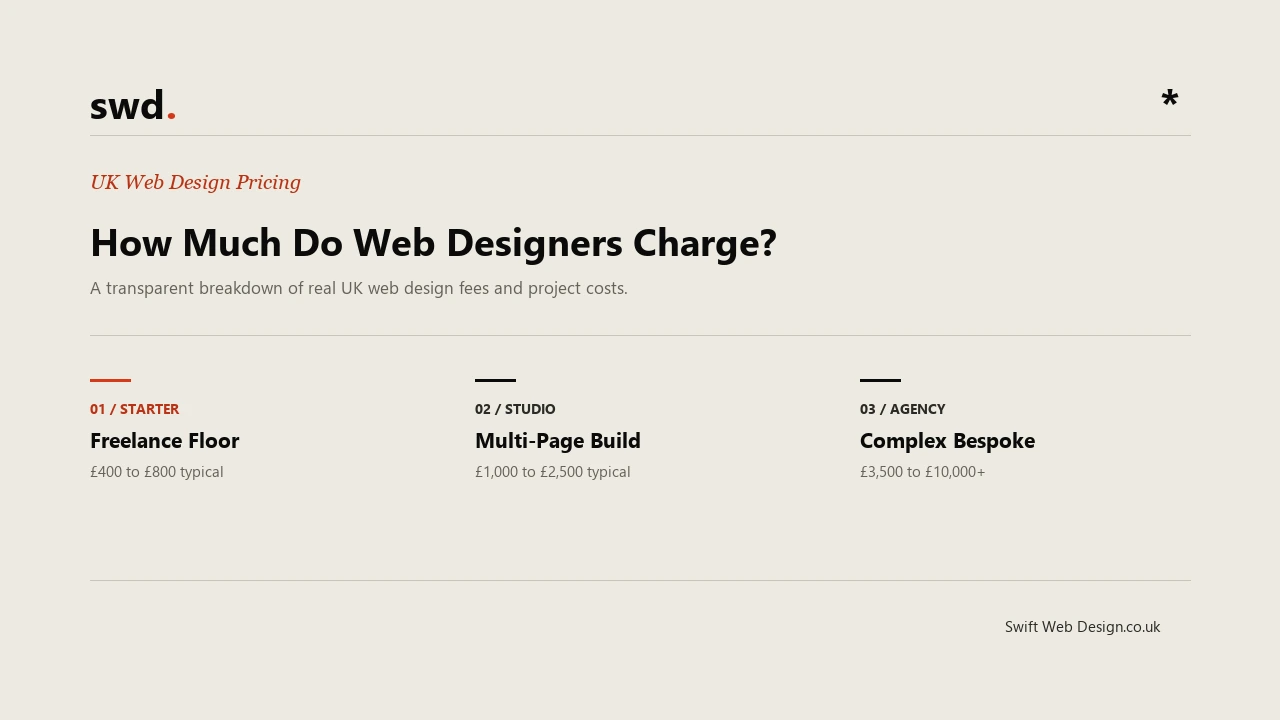
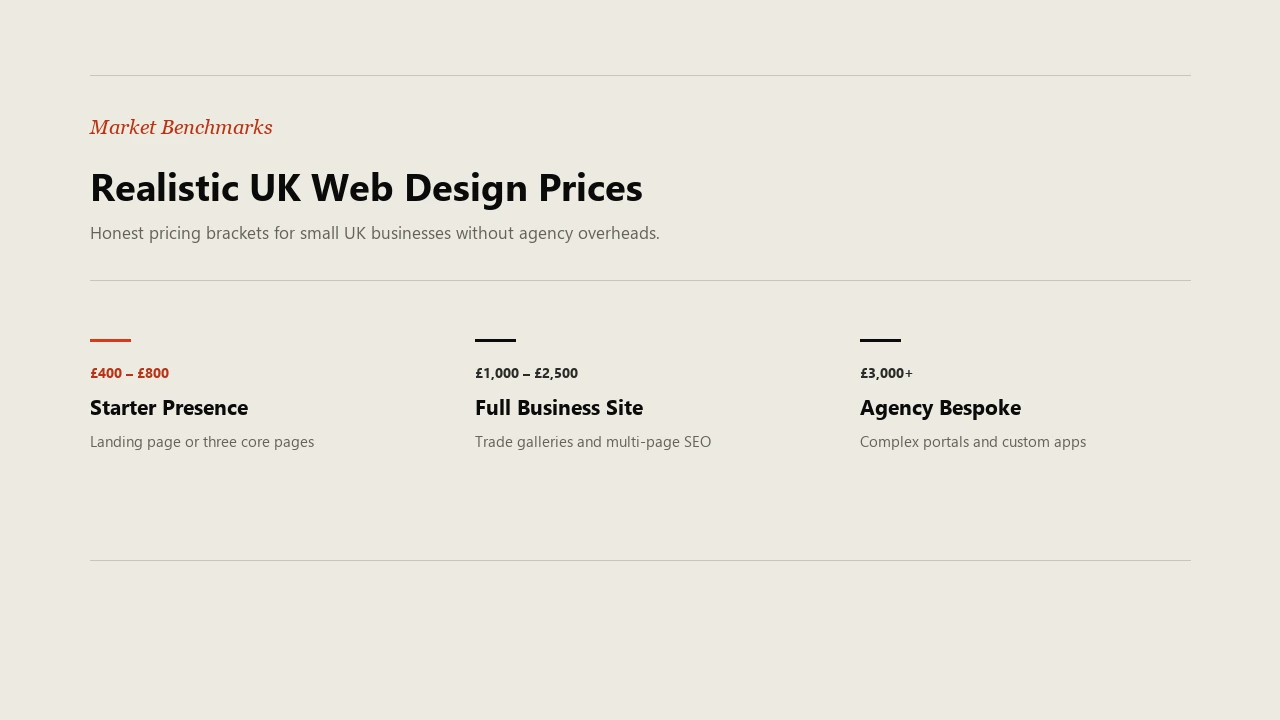
£400 to £800: Starter presence and landing pages. Ideal for new sole traders, startups, or local contractors needing a clean digital presence. This tier buys a fast, mobile-friendly landing page or focused three-page site with clear contact points, basic SEO setup, and reliable presentation.
£1,000 to £2,500: Full business websites. The standard tier for established trade businesses, independent clinics, and local service providers. This budget delivers five to ten custom pages, structured project portfolios, customer review integration, service-area targeting, and dedicated enquiry forms.
£3,000 to £6,000+: Agency and advanced builds. Required for complex setups such as custom client portals, extensive e-commerce stores with hundreds of inventory items, or multi-stage brand strategy workshops.
At Swift Web Design, we believe business owners deserve complete clarity. We publish our full web design prices openly on our site, offering fixed quotes agreed before work starts. Because we operate as an independent studio rather than a bloated agency, our clients pay for skilled design and technical execution, not account managers or city offices. Our simple builds start from ~£400, multi-page business builds run from £400 to £800, and we are not VAT registered, meaning the price on your quote is the exact figure you pay.
How to evaluate a web design quote before committing
Before paying a deposit to any web designer or agency, ask these three straightforward questions to protect your investment:
First, ask whether the quote is fixed or billed on a day rate. Uncapped day rates can balloon rapidly if revisions take longer than expected. Insist on a written quote with fixed deliverables and agreed revision rounds.
Second, ask who will own the website, domain, and content upon completion. Ensure your agreement explicitly states that all intellectual property transfers to you once the final balance is settled.
Third, ask for a complete list of ongoing costs. Confirm the monthly hosting fee, determine whether SSL certificates are included for free, and check whether you are tied into a mandatory maintenance contract. A dependable design partner will answer all three questions clearly and without hesitation.
Need a website that works this hard?
We design fast, findable websites for UK small businesses. Clear pricing, no jargon.