
Case study · Trades · Sheffield
From Instagram DMs to a proper website.
A Sheffield plastering and rendering firm with a growing reputation, and every enquiry landing in a social media inbox. We built them a website from scratch that shows the work and turns visitors into quote requests.
- Client
- Peak Plastering & Rendering
- Area
- Sheffield, Rotherham, Chesterfield
- Before
- Instagram, Facebook and a Yell listing
- What we did
- Website from scratch, business email, local SEO
- Since launch
- New projects and blog posts added
“We’ve used Swift Web Design and they’ve done what we needed. They’re responsive, and they actually listen when you come to them with ideas. The site they built is clear and it works.”
Where they started
Good work, and nowhere to show it.
- Quotes were getting lost. Enquiries arrived as Instagram and Facebook messages, mixed in with everything else, with no address, no job type and no way to follow them up properly.
- A listing that looked like everyone else’s. A directory page gave them a phone number online, but it sat beside every other plasterer in the area and said nothing about the standard of the work.
- No proof in one place. The best evidence they had, finished houses and before and after shots, was scattered across social posts that new customers would never scroll back through.
What we built
Built around five jobs the site has to do.
Every part of the site is there to move a homeowner from “who are these?” to sending a quote request. Here is what that looks like on their live site.
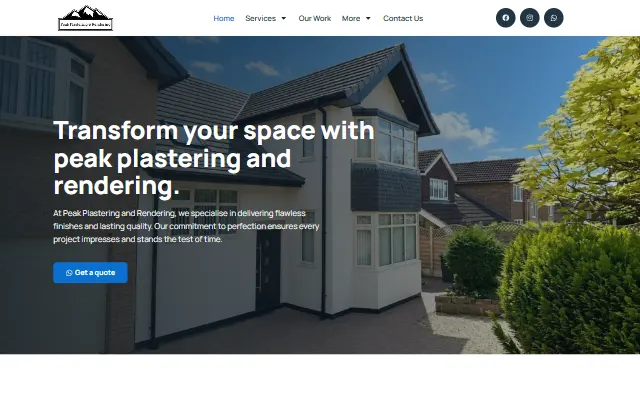
A homepage that says what they do in seconds
A real finished house, not a stock photo, with the trade, the area and a “Get a quote” button above the fold. Someone who arrives from a recommendation knows they are in the right place before they scroll.
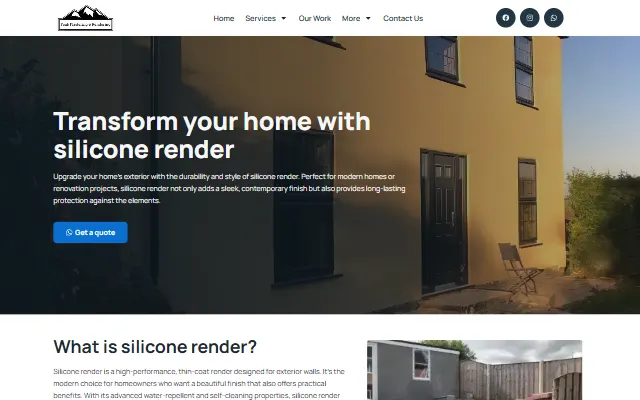
A page for every service
Plastering, rendering, silicone render and monocouche each have their own page, explaining what the work is and why a homeowner would choose it. That gives every service its own chance to be found when someone in Sheffield searches for it, instead of one page trying to rank for everything.
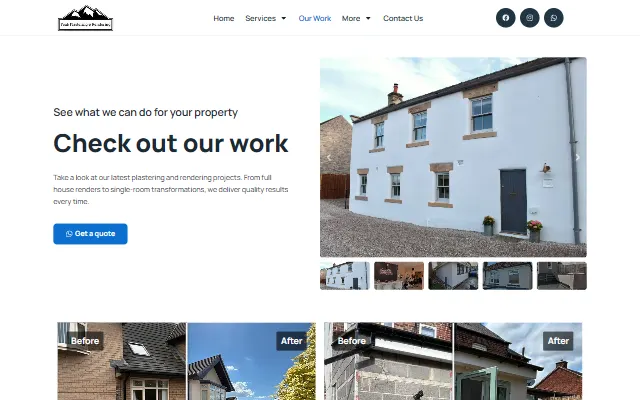
Before and after, side by side
The project page puts finished jobs and before and after pairs where a visitor can see them in one go. For a trade that is judged on the finish, this is the page that does the persuading.
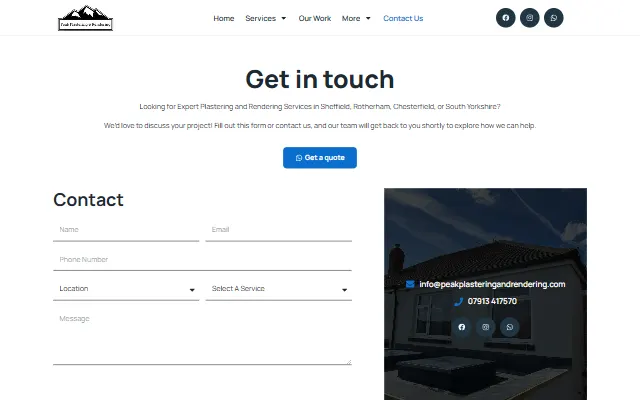
A quote form that asks the right questions
The form asks for the location and the service as well as the contact details, so each enquiry arrives ready to price, by email, instead of starting as a back-and-forth in a message thread. It is paired with a professional business email address we set up for them.
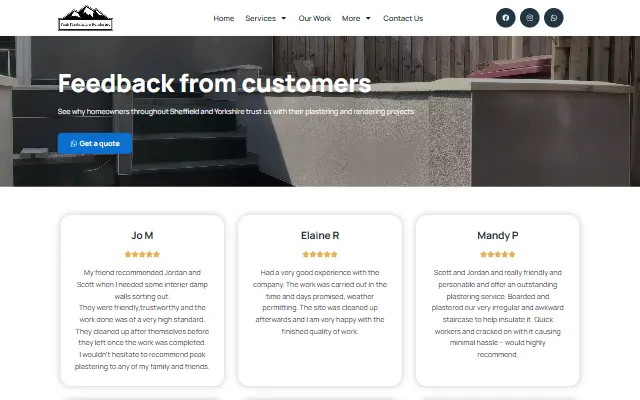
Reviews where the decision gets made
Customer feedback has its own page and is never more than a click away, so the word of mouth that brought the visitor in is backed up the moment they look for it.
Running a trade business and recognise the starting point?
Get a site like thisSince launch
A website that stays current.
Most trade websites go stale the week after they launch. We have kept working with Peak since theirs went live: adding newly finished projects, and writing blog posts about recent jobs. That keeps the site worth visiting for a homeowner and gives Google a reason to keep coming back.
It also means the site keeps up with the business. When the work changes, the website changes with it, without Peak having to learn a page builder.
Ongoing support is optional. Our monthly plans start from £80 a month.
What it costs
A site like this, at a fixed price.
A trades site with a page for each service, a project gallery, reviews and a quote form is our Standard build.
You get a written, fixed quote after a free 30-minute call, before any work starts. We are not VAT registered, so there is nothing to add. You own the finished site.
Not a plasterer?
The same approach works for most trades.
Questions
About a project like this.
How long does a site like this take?
Most of our builds take between 2 and 8 weeks from the first call to launch, depending on how many pages there are and how quickly the photos and wording come together.
We already have Instagram and Facebook. Do we need a website as well?
Social media is good for showing new jobs to people who already follow you. A website is what a stranger finds when they search for your trade in your area, and what someone checks after a recommendation before they call. It works alongside your social pages rather than replacing them.
Do you only work with trades?
No. Trades and local service businesses are a big part of what we do, but we build for all kinds of small businesses. Our portfolio has a finance guide and two logistics firms as well.