Contents
- Key takeaways
- The high-ticket trust problem in residential building
- How to structure a project gallery that actually sells
- Essential trust signals that protect five-figure quotes
- Real proof: our work with Peak Plastering & Rendering
- Mobile-first design for active building sites
- Website design for builders: realistic build costs and running fees
- Collaborating with specialist trade partners
- Ready to upgrade your building firm's digital presence?
For general builders, extension specialists, and construction contractors, word of mouth has always been the primary way to land jobs. When a client spends £40,000 on a wraparound kitchen extension or £80,000 on a double-storey addition, they want personal assurance that the builder is honest, capable, and reliable. But relying on word of mouth paired with an informal Facebook page is no longer enough to protect your pipeline. In this guide, alongside our pillar guide to websites for tradespeople, we examine how purpose-built website design for builders helps construction firms secure profitable, high-value contracts.
Key takeaways
- High-ticket construction projects require substantial trust signals, because homeowners investing substantial savings will not commit based on an unverified mobile number.
- Project galleries must be structured as detailed case studies with scope, timeline, and material notes, rather than dumped folders of unlabelled photos.
- Prominently displaying verified insurance coverage, trade memberships, and client testimonials de-risks the enquiry for cautious clients.
- A mobile-first website allows busy builders on active sites to manage incoming leads and project enquiries effortlessly.
The high-ticket trust problem in residential building
There is a vast psychological difference between hiring a window cleaner for £25 and hiring a builder for a £50,000 extension. For most homeowners, a major structural build is the largest financial investment they will ever make outside of buying their property. It involves weeks of disruption, scaffolding around their home, and substantial stage payments.
Homeowners are terrified of rogue builders, unfinished work, and disappearing deposits. When they receive your name from an architect or a friend, their first instinct is to investigate your business online. If your only web presence is a sparse Facebook profile with unlabelled photos taken from inside a van, their anxiety spikes. A polished, professional website eliminates that friction by presenting clear evidence of craftsmanship, financial stability, and established trading history.
When a website clearly sets out your trading standards, guarantees, and past successes, the customer feels they are hiring a competent contracting firm rather than taking a gamble on an unvetted sole operator.
How to structure a project gallery that actually sells
Almost every builder understands they need to show photos of past work. The problem is how those photos are presented. Dumping forty unlabelled, low-resolution snapshots into a generic gallery page does very little to build confidence.
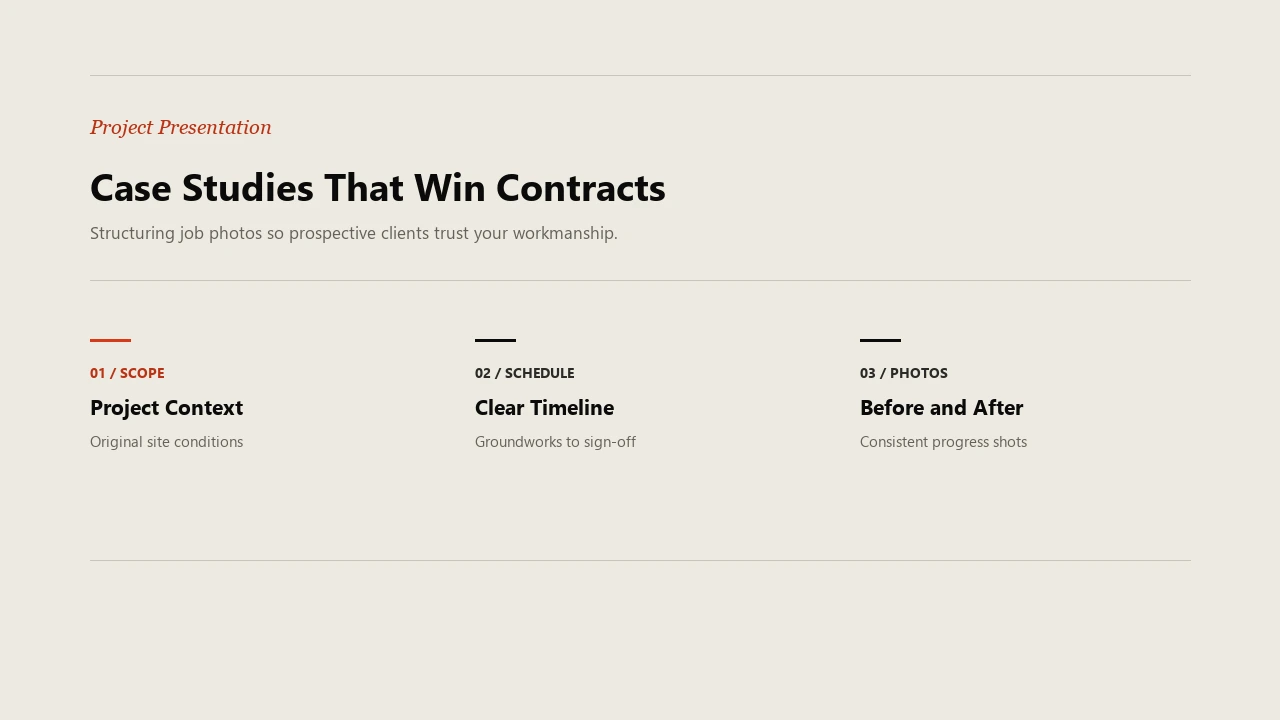
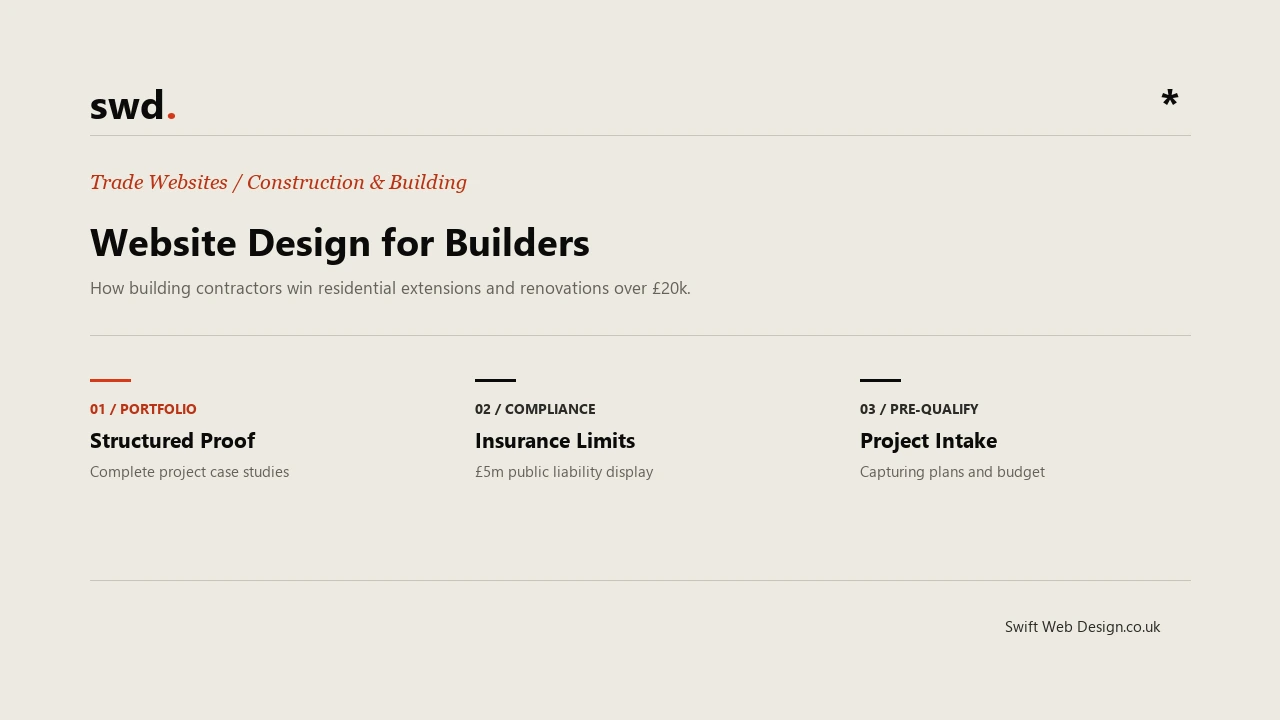
High-value clients want to understand the story and craftsmanship behind a build. We recommend organising your portfolio into structured case studies that highlight four key elements:
- Before, during, and after progression: showing the messy structural groundworks through to the immaculate plastered finish demonstrates your mastery of site management.
- Clear scope and timeline context: explaining project duration (such as a 12-week rear extension) and structural challenges overcome (such as inserting steel RSJs).
- Close-up architectural finishes: photographing neat brickwork mortar joints, precision roof tiling lines, and flush bifold door installations proves your standards of finish.
- Direct homeowner feedback: pairing the project imagery with an authentic quote from the homeowner praising your punctuality, tidiness, and communication.
Essential trust signals that protect five-figure quotes
When you submit a quotation for a major structural build, you are rarely the only contractor being considered. Homeowners typically collect two or three estimates. A strong website helps justify your pricing so you do not have to undercut your margins to win work.
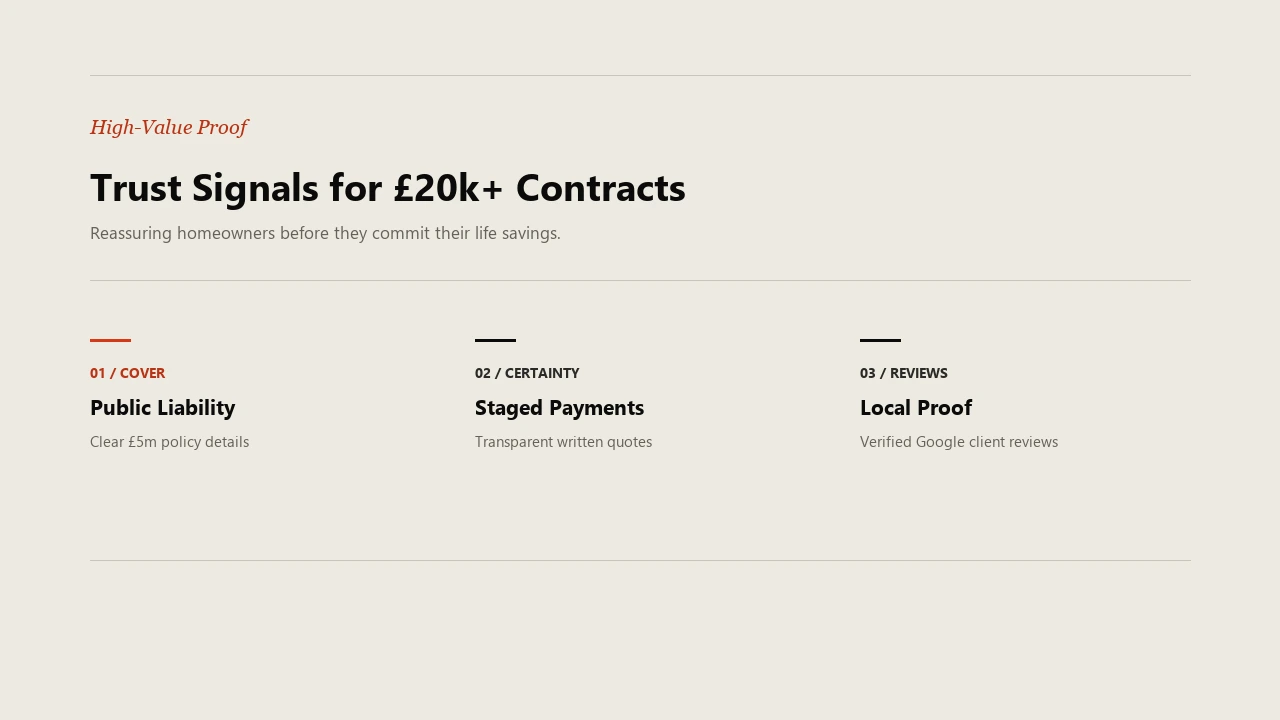
To reassure prospective clients and position your firm as an elite contractor, your website should feature these critical trust signals:
- Public liability and contract insurance: clear statements of your coverage levels (such as £5m public and employer liability insurance) give homeowners financial peace of mind.
- Trade organisation badges: verified memberships with recognised bodies such as the Federation of Master Builders (FMB), TrustMark, or the Guild of Master Craftsmen.
- A transparent step-by-step process: explaining how you handle site surveys, written estimates, payment schedules, and building control inspections removes the fear of the unknown.
- Registered company details: displaying your company registration number, VAT status, and trading address proves you are an established, accountable entity.
When these trust signals are visible throughout your pages, prospective clients approach discussions with confidence rather than suspicion. They recognise that your business operates with proper governance, which justifies an honest, professional price tag.
Real proof: our work with Peak Plastering & Rendering
A great example of this principle in action is detailed in our Peak Plastering & Rendering case study. Peak relied on a Yell.com listing and social media, with nowhere to properly show their finished jobs or make it easy to ask for a quote.
We built them a site with real project photos, clear ways to request a quote and a layout that works on a phone. It now sits alongside their word-of-mouth reputation as a proper first point of contact.
Mobile-first design for active building sites
Builders spend their working days on site managing trades, ordering materials, and overseeing deliveries, not sitting behind an office desk. Your website must work effortlessly within that reality.
When prospective homeowners browse your work on an evening and submit an enquiry form, the notification should route straight to your mobile email or WhatsApp. Similarly, your website must load instantly on mobile networks so an architect or building inspector on site can quickly pull up your portfolio or contact details without frustration.
Website design for builders: realistic build costs and running fees
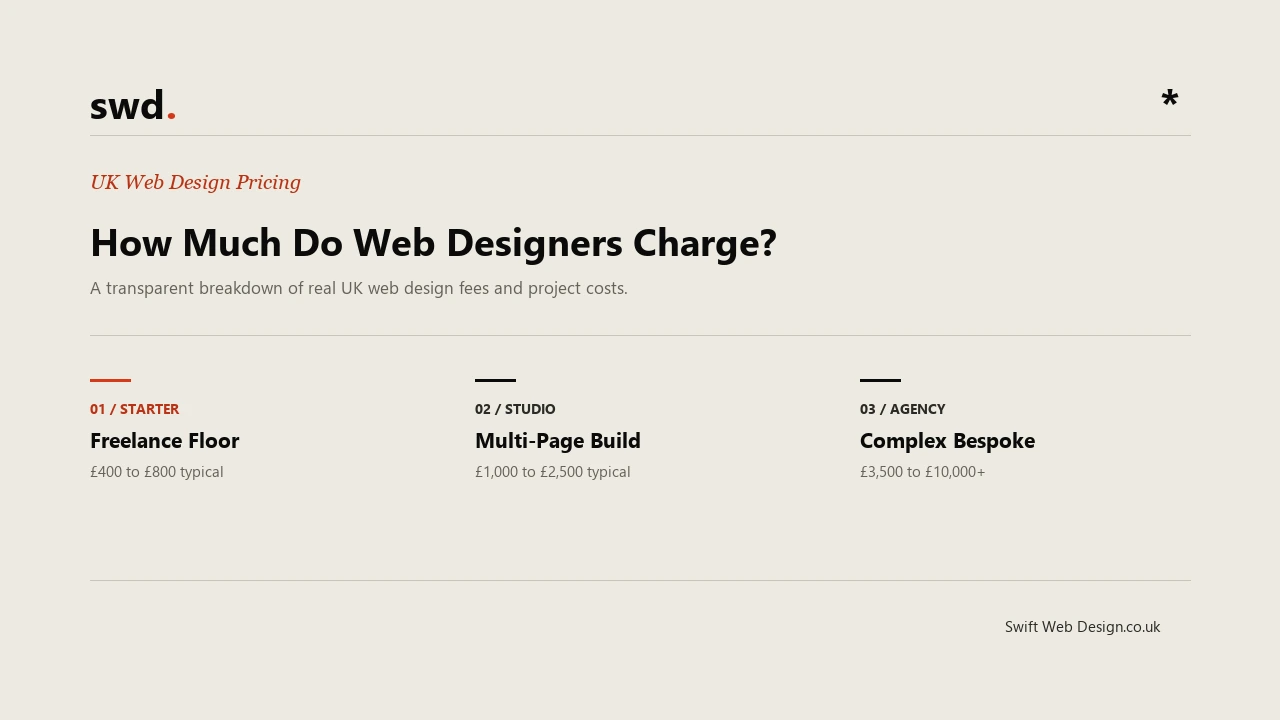
A professional website should be viewed as a productive business asset that pays for itself with the first signed contract. As we break down in our transparent guide to how much a website costs for a UK small business, a multi-page construction site typically sits between £600 and £1,500 depending on gallery depth and integration needs.
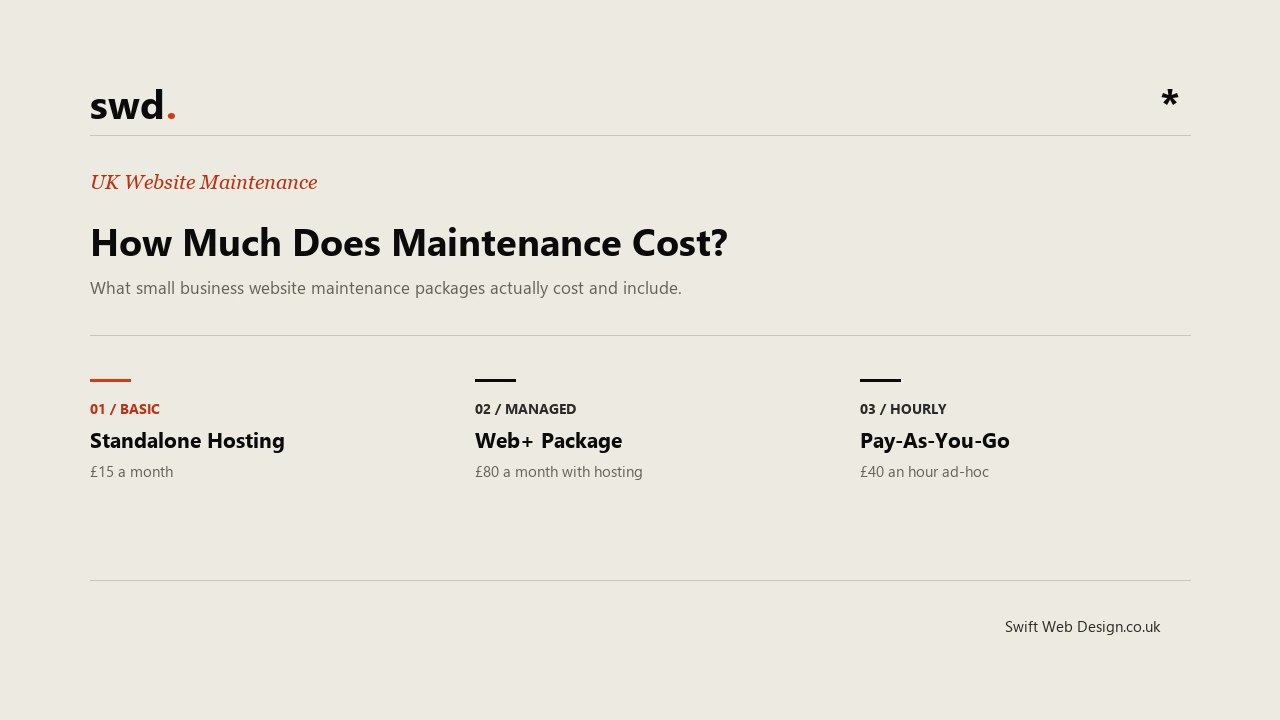
At Swift Web Design, our live pricing page outlines our fixed build packages with 0% VAT added and five revision rounds included. Ongoing hosting is straightforward at £15 a month, while our Web+ care plan at £80 a month ensures your site remains backed up, secure, and updated with new project photos throughout the building season.
Collaborating with specialist trade partners
Residential building projects rely on trusted subcontractors, including electricians, plumbers, and joiners. As we explore in our companion piece on web design for electricians, and on our page for plumbers, having a polished web footprint makes it easy to cross-promote dependable trade partners, creating a regional referral network that benefits everyone on site.
Ready to upgrade your building firm's digital presence?
If you are tired of competing on price in shared directories or relying entirely on an unbranded Facebook page, it is time to build a digital asset you own outright. Explore our dedicated website design for builders packages to see how we help UK construction businesses win better projects and higher-margin work.
Need a website that works this hard?
We design fast, findable websites for UK small businesses. Clear pricing, no jargon.