Contents
Small business website help UK searches turn up a lot of jargon, so here's the plain-English version instead. If you've been thinking "I know I need a website, I just don't know where to start," you're not alone. We hear a version of this most weeks.
Key takeaways
- Most people check online before calling, even when most of your work already comes from word of mouth.
- A homepage, services page, gallery, contact page and reviews cover what most small businesses genuinely need to start.
- The technical side, domain, hosting, security, email, should be handled for you, not something you're expected to learn.
- Get a clear, fixed cost upfront, not a vague "it depends" that only gets answered after you've committed.
Why it's worth sorting out
Even when most of your work comes from word of mouth, most people still check online before they call. A website lets people find you outside your working hours, shows you're established, gives them an easy way to get in touch, and lets you show off past work and reviews. If you're not there when they look, some of them will just go with whoever is.
Why so many businesses put it off
- Too many choices. Builders, freelancers, agencies, all pitching differently, and it's genuinely hard to tell what's actually right for your business.
- No time. Between jobs, quotes and admin, learning a new tool from scratch feels like one more thing you don't have room for.
- Worry about being ripped off. Paid-for-and-never-finished, overcharged, stuck with something you can't actually update yourself, these stories put people off for good reason.
- The jargon. Hosting, domains, SEO, plugins, none of it needs to be complicated, but it sounds like it is until someone explains it in plain English.
Small business website help UK: a simple five-step plan
- Find someone who's actually worked with businesses like yours. Not every web designer understands what a trades or local service business actually needs.
- Work out what you genuinely need, which for most small businesses is a homepage, a services page, a gallery of your work, a contact page, and somewhere for reviews (our guide to what to prioritise first covers this in more depth). Nothing more elaborate than that is usually necessary to start.
- Let someone else handle the technical side: domain, hosting, security, email, all the parts that sound complicated but shouldn't require you to learn anything new.
- Make sure it's actually findable. Basic local SEO means the site has a real chance of showing up when someone searches your trade and area.
- Keep it active. A site that never changes after launch gradually loses the small ranking benefit that fresh content gives it.
What the first conversation actually covers
It's usually shorter and less technical than people expect. What the business actually does, who it's trying to reach, what's already in place, a Facebook page, a Yell listing, nothing at all, and roughly what budget makes sense. None of that requires knowing the difference between hosting and a domain beforehand, that's the part that gets handled for you. The goal of the first call is working out what's actually needed, not testing whether you've done your homework.
If you've already got a website
The next question is whether it's actually performing. Google PageSpeed Insights is free, so put your site's address in and it'll show you how it performs on mobile and desktop with specific suggestions. If it's slow or feels clunky on a phone, that's costing you enquiries whether you've noticed it or not. That's the kind of small business website help UK owners rarely get told about until something breaks.
What it costs
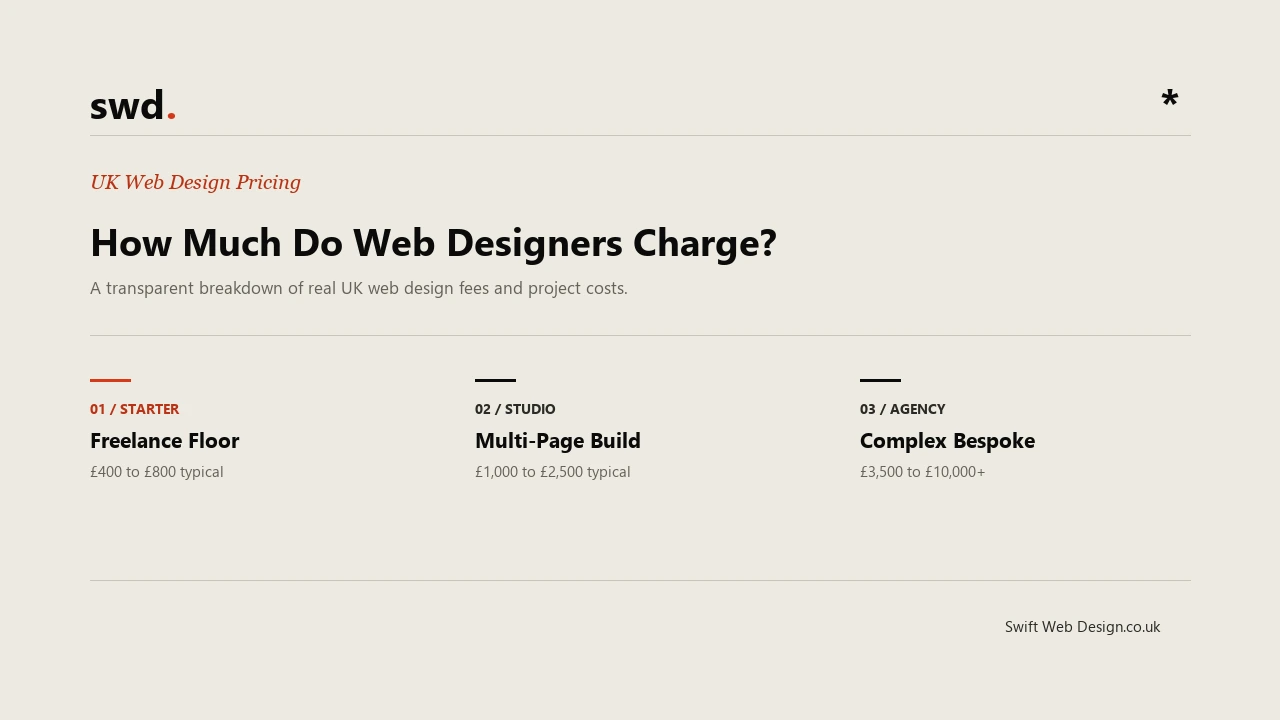
You don't need a five-figure budget to get a genuinely good site built. Costs vary by scope and change over time, so rather than quote a figure that might be stale by the time you read this, our current pricing is always kept up to date on our pricing page. Whatever the scope, you should get a clear, upfront cost with no surprise charges, not a vague "it depends" that only gets answered after you've committed.
Getting started
You don't need to have all the answers before you start this conversation, that's genuinely what the first call is for. If this describes where you are, get in touch and we'll talk it through in plain English.
Frequently asked questions
I don't know anything technical, is that a problem?
No. Domains, hosting, security and email should all be handled for you, not something you're expected to learn from scratch. A good web designer explains what's happening in plain English rather than assuming you already know the jargon.
How do I avoid getting overcharged or left with an unfinished site?
Get a clear, fixed cost upfront rather than a vague "it depends," and ask specifically what happens after launch, whether there's a real person to contact if something needs changing later. Our guide to affordable web design has realistic cost ranges to check any quote against.
What's the very first step if I don't know where to start?
A conversation, not a decision. You don't need to have all the answers before that first call, working out what you actually need is exactly what it's for.
Need a website that works this hard?
We design fast, findable websites for UK small businesses. Clear pricing, no jargon.