
Restaurants, pubs & cafes
Websites for independent kitchens, pubs and cafes.
Someone is standing outside at seven on a Friday deciding where to eat. They want the menu, tonight’s opening hours, and a table. If your menu is a PDF that opens sideways, they are going to the place next door.
From £400 • No VAT to add • 1–8 weeks • Yours once paid & live
What visitors want
What people come to the site for.
Hospitality websites get overbuilt constantly. Full-screen video, a story about the founder’s grandmother, a parallax scroll through the dining room. Meanwhile the things most visitors came for are hard to find.
They want the menu, today’s opening hours and a way to book, usually on a phone and often while walking.
The PDF menu is the usual culprit: it opens at the wrong zoom on a phone, and Google cannot read the dish names inside it.
What goes on a hospitality site
Menu, hours and booking first.
Once those work on a phone, there is room for atmosphere. A site built the other way round can look lovely and still take very few bookings.
Menus as real pages
Readable on a phone without pinching, indexed by Google so dish searches can find you, and editable by you when the specials change. Never a PDF.
Opening hours that are correct
Including bank holidays and the days you close. A customer who turns up to a locked door may not try again, and wrong hours on Google cause that too.
Booking without friction
Whether you use OpenTable, ResDiary, a simple form or the phone, it needs to be two taps from any page. We work with whatever you already use.
A site your Google listing can point to
Many diners see your Google listing before they see your website. You set that profile up with Google, and the site gives it a menu page and booking link to point to, with matching hours.
Allergen information
Handled clearly and kept current, including the pre-packed for direct sale rules. It is a legal obligation, and it reassures anyone booking for a group.
Photography that sells the room
Real photos of your food and your space, sized to load fast. Stock photos of someone else’s pasta are easy to spot.
See it built
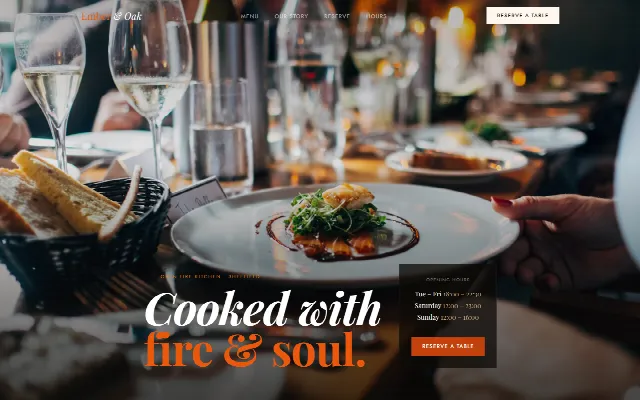
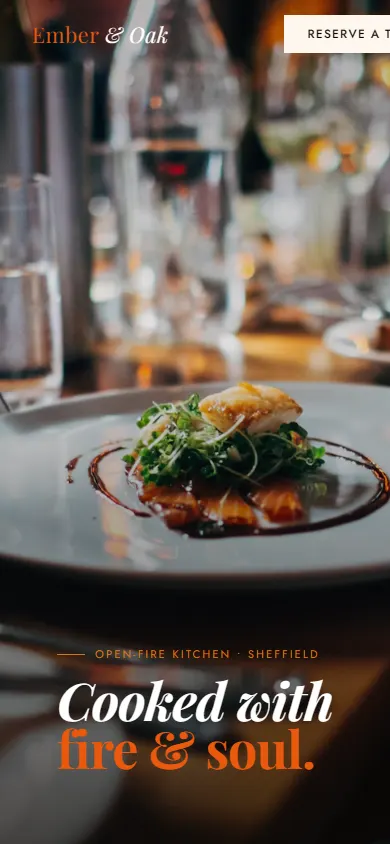
Ember & Oak Kitchen.
We built a full concept site for an open-fire restaurant in Sheffield, partly to work out how a menu should behave on a phone when someone is standing outside in the cold deciding whether to come in.
It is a demo, so you can pick it apart without anyone’s real business on the line. Look at the menu structure, the booking route and how the hours are handled.
There are four other industry demos alongside it on the examples page.
Restaurant margins are tight, and we can schedule the build around a quiet period so it does not land in your busiest weeks.
Common questions
Questions from owners
Related pages
More for hospitality
Ember & Oak demo
Our Sheffield open-fire restaurant concept, built to test how menus behave on a phone.
Web design in Sheffield
The Ember & Oak demo above is Sheffield-built. See our other local work there.
Web design in Kettering
Home base in Northamptonshire, building for cafes and restaurants on the same fixed-quote terms.