Contents
- Key takeaways
- The brief behind this web design case study
- Starting with the homepage
- What went into the rest of the site
- What's kept it working since launch
- What we'd tell another trades business considering the same move
- How this applies beyond plastering and rendering
- Where it's landed
- Frequently asked questions
This web design case study looks at Peak Plastering & Rendering, who came to us relying entirely on their Yell.com listing and social media to bring in work. That had gotten them some way, but it left them without anywhere to properly show the quality of their finished jobs, or an easy route for a new enquiry to actually get in touch.
Key takeaways
- Yell.com and social media alone leave a trades business without anywhere to properly show finished work or make it easy to get a quote.
- The homepage needs to say what the business does within a few seconds, using real project photos, not stock imagery.
- A responsive layout matters more here than for most other business types, since most trades enquiries come from someone searching on their phone.
- A website doesn't replace referrals and reputation, it gives them somewhere solid to land once someone's checking you out.
The brief behind this web design case study
In our first conversations, it came down to a short list: a website that looked as professional as their work actually is, a simple and modern design rather than anything overdone, clear ways for a visitor to request a quote, and ongoing support so the site wouldn't go stale the way a lot of small business sites do after launch.
Starting with the homepage
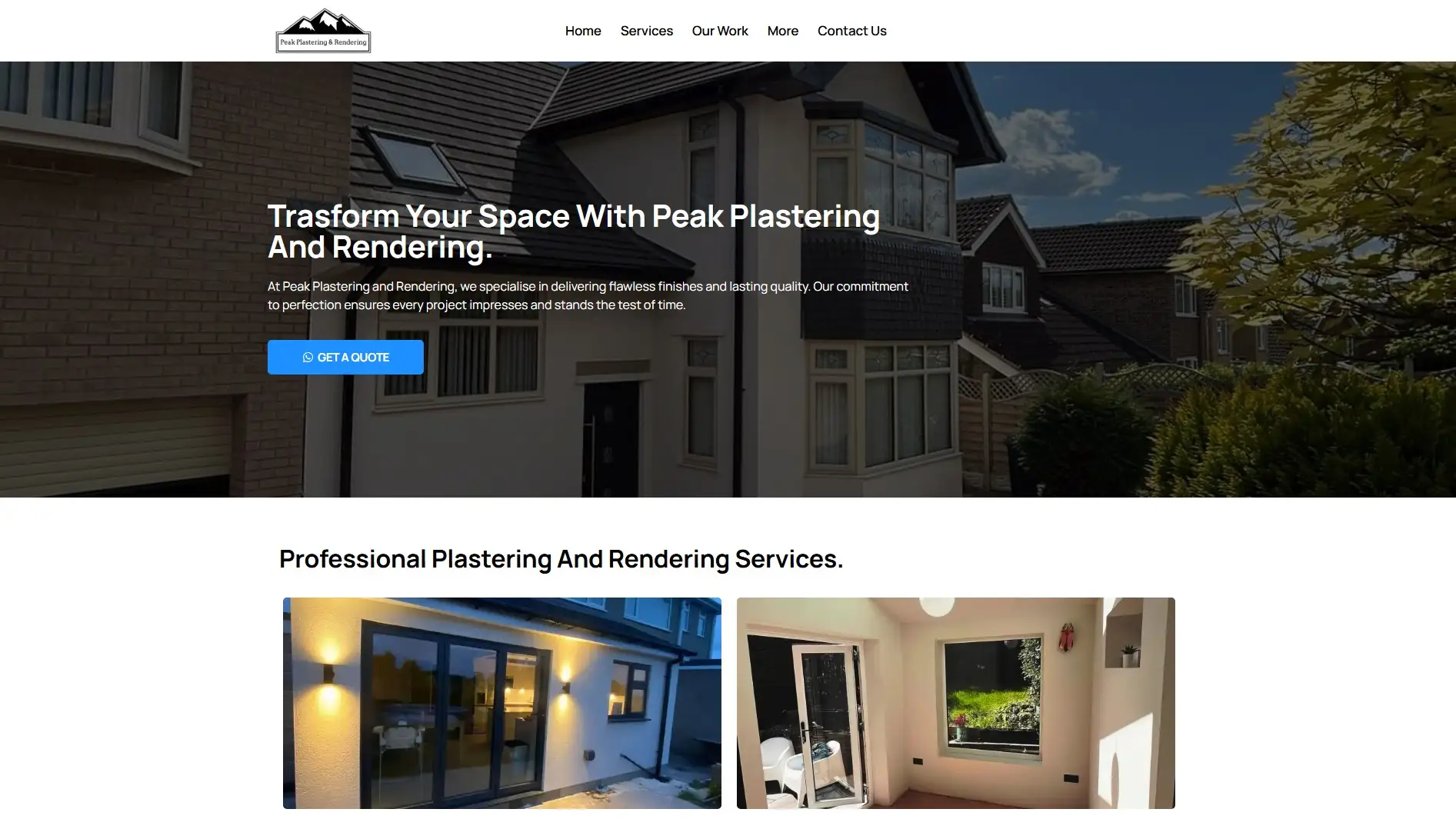
We built the homepage first, since it sets the tone for everything else. It needed to say what they do within a few seconds. It needed to show real photos of completed projects rather than stock imagery, and make the path to getting a quote obvious rather than something a visitor had to hunt for.
What went into the rest of the site
Beyond the homepage, a handful of things mattered just as much for a trades business specifically:
- Clear calls to action throughout, so requesting a quote never took more than a couple of clicks
- A fully responsive layout, since most enquiries for a trades business come from someone searching on their phone
- On-page SEO groundwork, so the site had a genuine chance of ranking for local searches
- Attention to page speed, so the site didn't lose visitors before it had a chance to make its case
What's kept it working since launch
A website doesn't do its job by sitting there unchanged for years. We've kept working with Peak Plastering & Rendering since launch, writing blog posts about recent projects and updating the site with new completed work, which keeps it both genuinely current and better positioned in search over time.
What we'd tell another trades business considering the same move
The biggest mistake we see trades businesses make isn't skipping a website altogether, plenty already have one. It's treating it as a one-off job: get it built, put the address on the van, and never touch it again. Peak Plastering & Rendering's site works because it's kept current, new project photos, the odd blog post about a recent job, not because it launched well and was then left alone.
The other thing worth saying plainly: a website doesn't replace Yell.com or Facebook, and it doesn't need to. It gives an undecided visitor, the kind who's already found you through a recommendation or a search, somewhere that actually backs up the reputation rather than a directory page that looks much the same as every competitor's.
How this applies beyond plastering and rendering
Nothing about this approach is specific to plastering. Electricians, landscapers, roofers and most other local trades face the same gap: a directory listing and a social profile that get some enquiries, but nothing that shows the actual standard of finished work or makes a quote request simple. The structure here, a strong homepage, service-specific detail, mobile-first design, ongoing updates, applies just as directly whatever the trade actually is.
Where it's landed
The site now sits alongside their social media and word-of-mouth reputation as a proper first point of contact, one that reflects the standard of the work rather than relying entirely on a directory listing to do the talking. It's a useful example of what a website adds for a trades business specifically, since it doesn't replace referrals and reputation, it just gives them somewhere solid to land. BrightLocal's own research keeps finding that most people check a business online before they get in touch, even after a personal recommendation, which is exactly the gap a directory listing alone can't close. If you run a similar trades business, our guide for tradespeople covers the same pattern in general terms, and our pricing page has current costs if you're weighing up the same move. If building or rendering work is specifically your trade, our page for builders goes into more detail on what that looks like.
Frequently asked questions
How long did a project like this typically take?
Timelines vary by scope, but a site of this size is a realistic example of what we usually deliver within a few weeks from first conversation to launch, then ongoing support afterwards rather than a one-off handover.
Do you only build sites for trades businesses?
No, though trades and local service businesses are a big part of our work, and Peak Plastering & Rendering is one example of that. Our guide for tradespeople covers the pattern in more general terms.
What happens after a site like this launches?
We keep working with clients after launch rather than disappearing once the site is live, writing new content and updating the site with recent work, which is part of what's kept this one both current and findable.
Need a website that works this hard?
We design fast, findable websites for UK small businesses. Clear pricing, no jargon.