Contents
- Key takeaways
- Why web design pricing feels impossible to compare
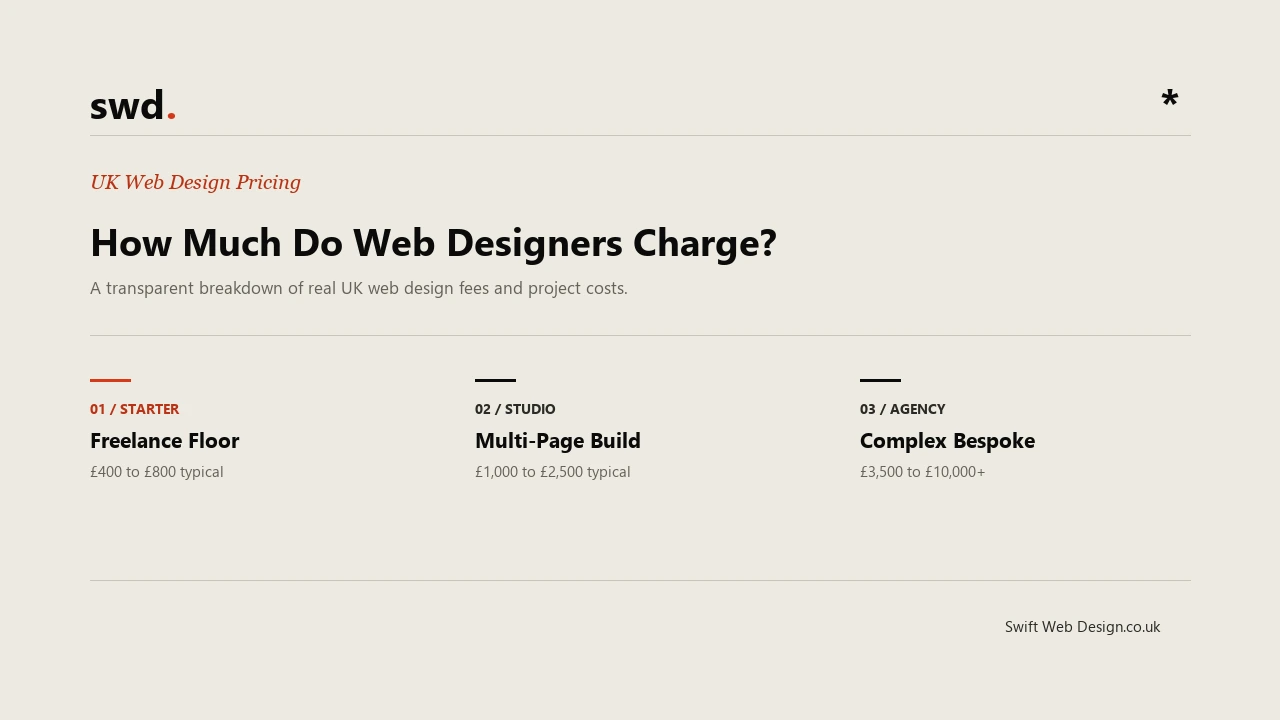
- The three common price routes across the UK market
- What standard project tiers buy at Swift Web Design
- Ongoing running costs: what happens after launch
- What actually drives a web design quote higher
- What cheap web design usually costs you later
- What a new website can't promise
- Why trades and service businesses need transparent pricing
- Fixed quotes versus day rates
- Questions to ask before you accept a quote
- How to plan your web design budget
Most small business owners who set out to buy a website find the pricing completely opaque. One agency quotes £8,000 for a five-page brochure site, a local freelancer quotes £900 for what sounds like the same thing, and an online builder claims you can do it yourself for £12 a month. Our aim in this guide, alongside our realistic guide to affordable web design, is to explain what those numbers actually mean and what a dependable business website costs in the UK today.
Key takeaways
- A simple brochure website for a UK small business typically starts around £400 to £600 with an independent studio.
- Agency quotes past £3,000 usually reflect account managers and city-centre office overheads rather than better code.
- Ongoing running costs are predictable: reliable hosting sits around £15 a month, while managed technical care plans run around £80 a month.
- Fixed fee pricing protects your budget, provided your quote fixes the page count and revision limits before work begins.
- Quotes under £300 usually mean a cheap theme and no testing, and a lot of those sites get rebuilt within a year.
Why web design pricing feels impossible to compare
When you ask a tradesperson how much it costs to plaster a three-bedroom house or install a combi boiler, the estimate usually lands within a recognisable bracket. Materials cost what they cost, and the labour reflects clear trade norms. Web design rarely feels that clean because buyers are rarely comparing identical work.
Ask three suppliers to quote for the same five-page brochure site and you could get £350, £1,400 and £6,000 back. The £350 quote is usually a bought WordPress theme with your text dropped in over an afternoon, and nobody checks it on a phone. The £1,400 quote pays for layouts planned around your services, proper page titles and descriptions, compressed images and DNS set up correctly. The £6,000 quote pays for much the same work plus account managers, discovery meetings and an office.
A £500 website and a £5,000 website can look superficially similar on a mobile screen during a quick demonstration. The difference lives underneath: page speed, structured content that helps Google understand your business, custom contact forms that block spam, mobile layout stability, and whether someone picks up the phone when an enquiry fails to send. Because those details stay invisible until after launch, agencies often price to what they think a client will bear rather than what the build actually requires.
The three common price routes across the UK market
Before looking at specific project tiers, it helps to understand the three distinct ways UK businesses source a website, along with their honest trade-offs.
1. The do-it-yourself website builder
DIY platforms like Squarespace, Wix, or Shopify typically cost £10 to £30 a month, depending on the subscription plan. If you have an eye for layout and twenty spare hours to write copy and format images, this is an accessible starting point. Many businesses launch this way. The catch is your own time: business owners often spend three weekends wrestling with alignment and mobile padding, only to end up with a site that feels amateur or fails to rank in local search results.
2. The independent specialist or small studio
A small studio or experienced freelancer typically charges between £400 and £1,500 for a standard business build. You deal directly with the person writing the code and building the pages. There are no account managers or account executives sitting between you and the design work. This route is the most sensible balance of commercial quality and budget for established sole traders and expanding trade businesses.
3. The traditional digital agency
Traditional agencies commonly quote £3,000 to £10,000 or more for brochure websites. Part of that fee covers account managers and internal planning workshops, while a larger share simply funds office overheads and agency margins. If your business needs deep bespoke software or corporate compliance sign-offs, a large agency might be necessary. For a standard business generating local leads, it is usually paying for overheads you never use.
What standard project tiers buy at Swift Web Design
We publish our numbers openly so nobody wastes time guessing. On our live pricing page, every package is fixed-price and agreed in advance, with no added VAT because we are not VAT registered. Here is what those tiers cover in practice.
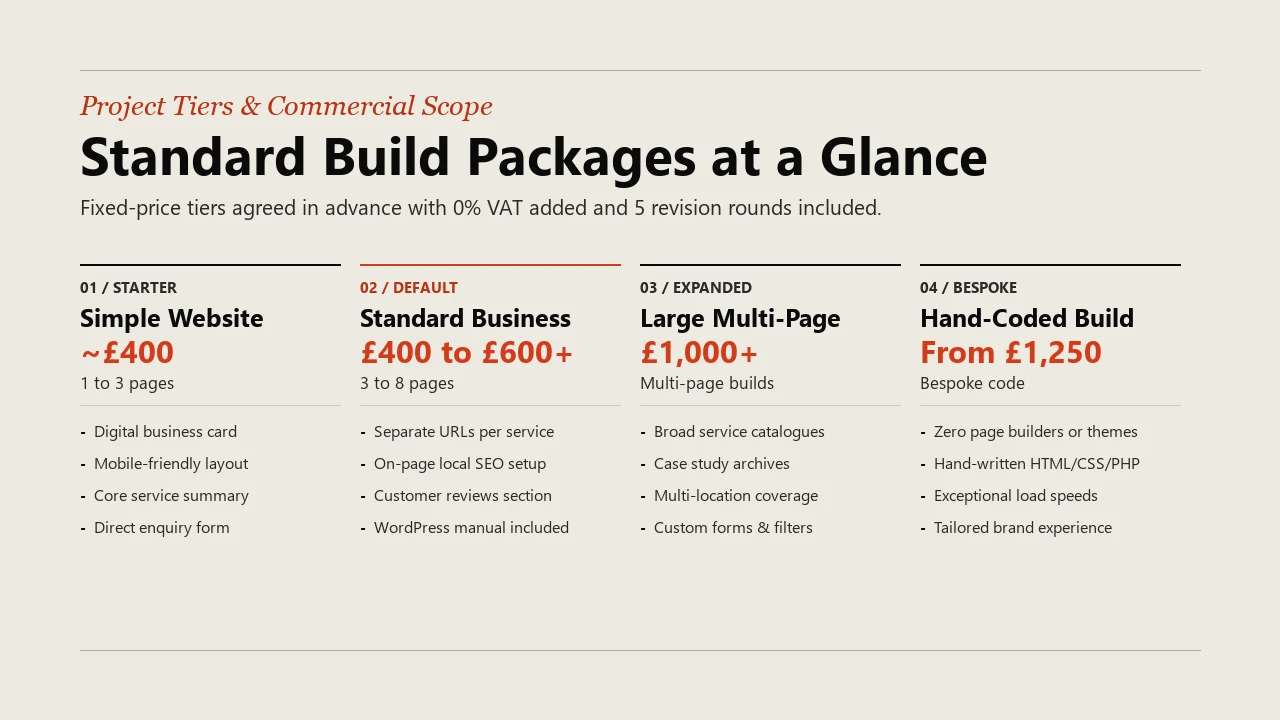
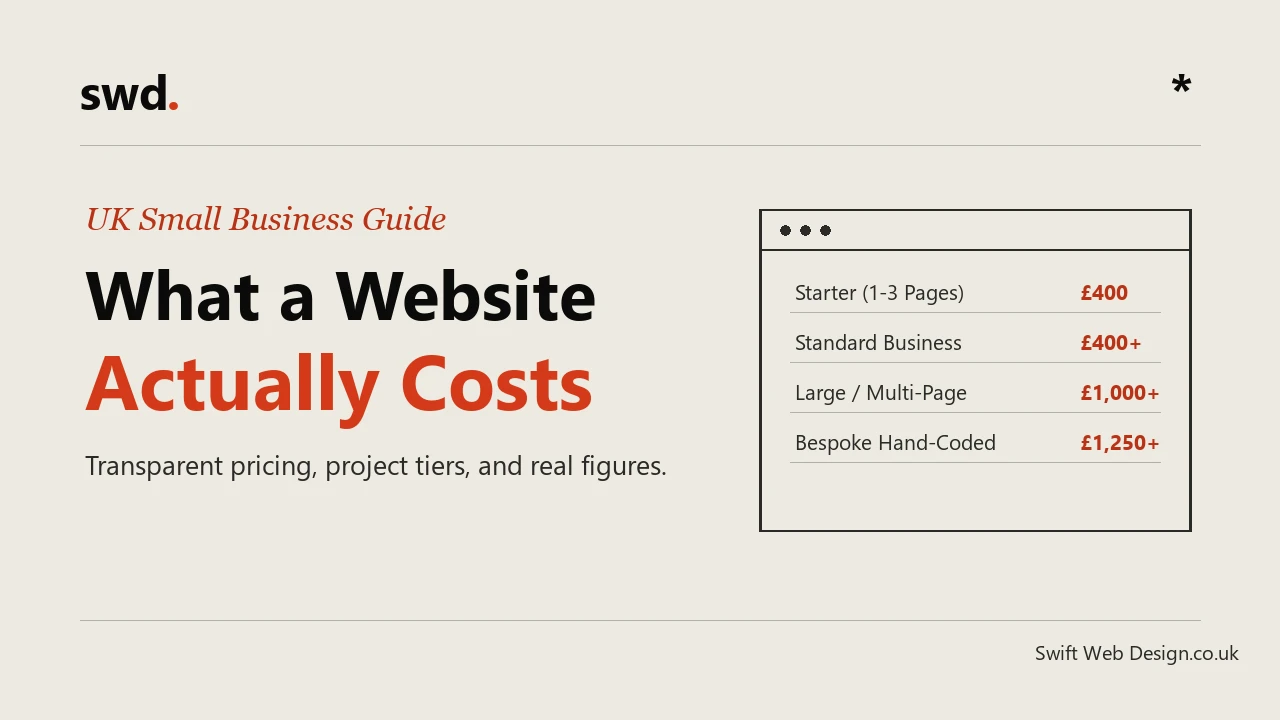
Starter and simple websites: around £400
A simple site consists of one to three focused pages. It suits new ventures, independent consultants, and sole traders who need a clean digital home rather than a sprawling library. You get a fast, mobile-friendly landing presence, an introduction to your services, customer reviews, and a direct enquiry form. When launching your first venture, as we outline in our guide on websites for startup founders, keeping the initial scope lean prevents cash flow strain while getting your business found online.
Standard business builds: £400 to £800
This is the build we produce most often. Running between three and eight pages, a standard site gives each core service its own dedicated URL. That separate page structure allows you to target distinct local search terms, such as residential plastering or commercial rewiring, rather than crowding everything onto a single page. It includes on-page search engine optimisation, clear contact points, and a full WordPress manual so you can update text yourself.
Large and multi-page sites: £1,000+
For established businesses with broad service catalogues, case study archives, or multi-location coverage, a larger multi-page architecture is required. These projects involve custom layouts and specialised integration work. Turnaround runs slightly longer, typically four to eight weeks, with careful attention given to site structure and user flow.
Fully bespoke websites, built from scratch: from £1,250
While our standard builds use WordPress and Elementor for client flexibility, our bespoke tier removes page builders and themes completely. It is built from scratch by us rather than assembled from a template. Pages load very fast and there are no third-party plugins to update or break. It suits businesses that want a site nobody else has.
Online stores and e-commerce: £800 to £5,000+
E-commerce adds checkout logic, payment gateway security, product inventory management, and customer notification emails. A basic store with up to ten products sits between £800 and £1,200. A standard catalogue covering ten to fifty items with discount tools and sales reporting ranges from £1,200 to £2,300. Larger stores with custom checkouts and heavy inventory start at £2,300 and scale based on requirements.
Ongoing running costs: what happens after launch
A website is not a one-off print flyer; it requires a home on the internet and routine maintenance. Budgeting for these ongoing items avoids surprises three months down the line.
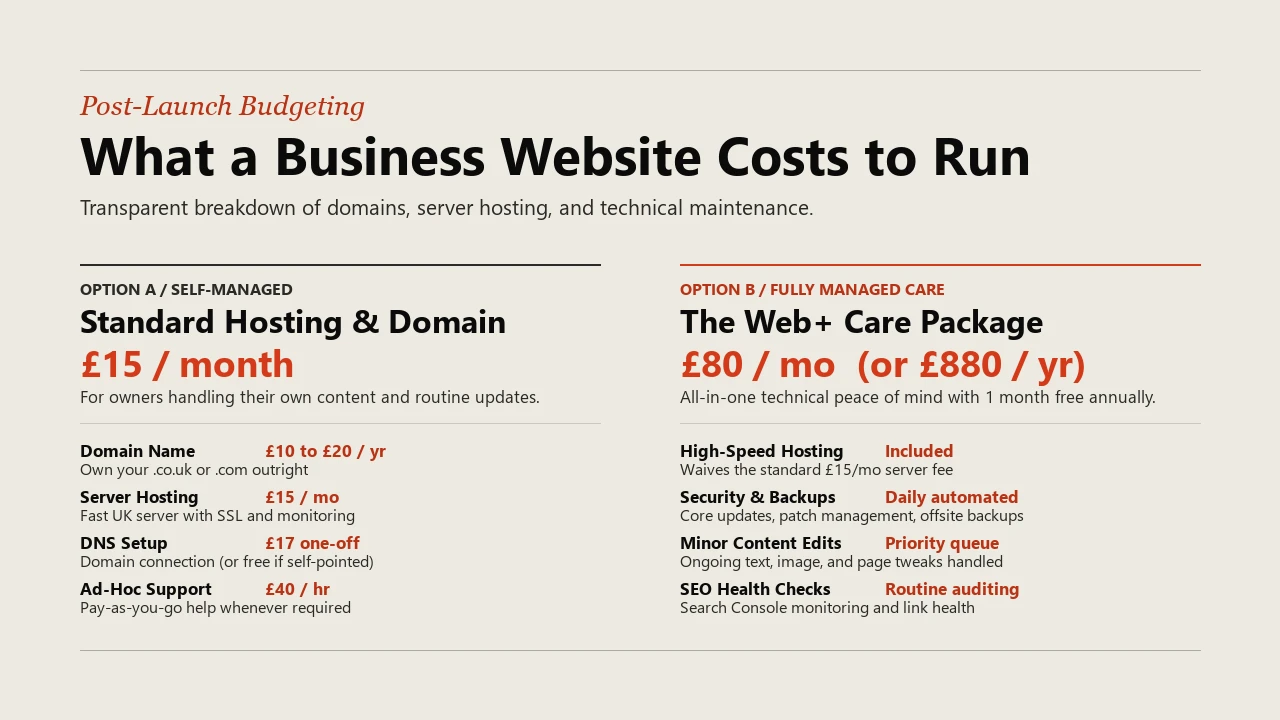
- Domain registration: around £10 to £20 a year for a .co.uk or .com address. Connecting an existing domain to a new site carries a one-off fee of £17 if we handle the DNS setup, or free if you manage the records yourself.
- Standard web hosting: £15 a month on fast UK server infrastructure. Good hosting keeps pages quick and online when traffic spikes.
- Technical maintenance and support: our Web+ package at £80 a month (or £880 annually) combines high-speed hosting with regular core updates, weekly backups, basic SEO checks, and priority support for minor content edits.
If you prefer to manage updates yourself, you can pay for hosting alone and book pay-as-you-go support at £40 an hour whenever you need a specific change.
What actually drives a web design quote higher
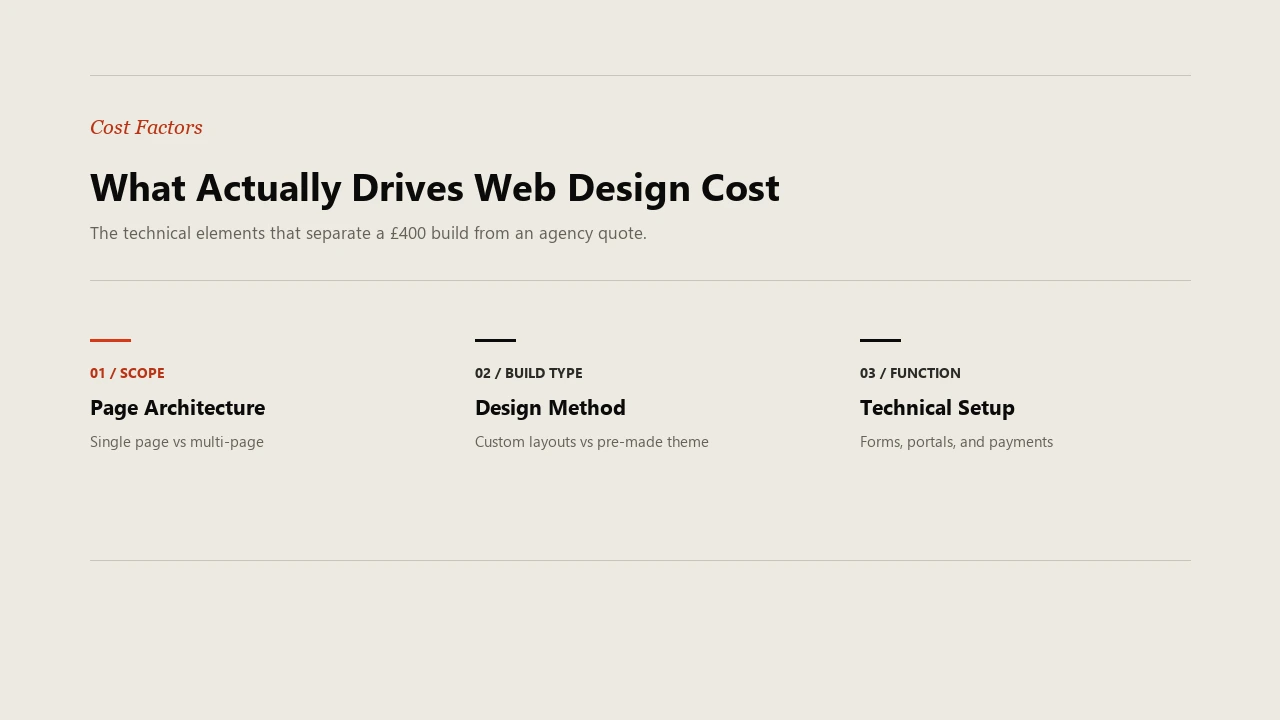
When a web design estimate climbs above the baseline, it is usually down to five things.
First is copy and photography. If you supply clean text and high-resolution photos of your actual work, the project moves quickly. If your designer has to write all website copy from scratch or source bespoke photography, labour hours increase.
Second is turnaround compression. A typical build takes between two and eight weeks. If a client needs a full multi-page site launched in ten days for an upcoming trade show, rush delivery adds 10 to 20 percent to the project fee to account for overtime and schedule reshuffling.
Third is revision rounds. Every build at Swift Web Design includes five full revision rounds as standard. That is plenty of scope to fine-tune colours and layout spacing. If a project requires ten or fifteen rounds due to shifting internal opinions, extra rounds are billed at £28 an hour for rounds six to ten, and £40 an hour thereafter.
Fourth is functional complexity. A standard contact form is straightforward. A dynamic cost calculator, a trade portal with user logins, or a multilingual switch involves dedicated programming and thorough testing.
Fifth is technical SEO setup. Unique page titles and descriptions, clean URLs, an XML sitemap and link previews for social media all take time. A quote that skips them is cheaper, and the site is much harder for Google to understand.
What cheap web design usually costs you later
Freelance portals are full of £99 and £150 websites, and they look tempting when cash is tight. To make money at £150, the supplier has to finish in under four hours. That leaves no time to test the contact form on different phones, check load speed on mobile data or set up the domain properly. Some of these builds use pirated themes or plugins that never get security updates, so the next WordPress update can break them and your enquiry form with them.
We see the result fairly often: a site that needs rebuilding within a year, so the owner pays twice. A low price is fine. A low price with nobody answering the phone when the form stops working is where it goes wrong.
What a new website can't promise
A well-built site gives Google clean code, sensible headings, fast pages and a sitemap submitted through Search Console. Nobody can honestly promise rankings or a number of enquiries from a new site on its own, though. Google also looks at how old your domain is, who links to you, how many competitors you have and your reviews. Getting to page one takes reviews, directory listings and regular content on top of the build. If a quote promises guaranteed top positions for a basic fee, walk away.
Why trades and service businesses need transparent pricing
A lot of our clients run hands-on trade and service companies. As we explored in our piece on why a proper website for tradespeople beats a Facebook page, trades business owners value directness. When you quote a customer for a roofing job or a bathroom refit, you give them a clear figure and stick to it. You do not bill them for thirty mysterious hours of account management.
Web design should operate on the exact same basis. If an agency cannot explain what each line item covers before work begins, you should look elsewhere. Knowing your total outlay from day one allows you to calculate how many new client enquiries or completed jobs you need to cover the investment.
Fixed quotes versus day rates
We would always pick a fixed fee quote over hourly billing or open-ended day rates. Day rates invite scope creep: a project estimated at five days can stretch to eight if the agency hits unexpected hurdles, and you end up with an inflated invoice you never agreed to.
A fixed fee quote puts the delivery risk where it belongs: on the design studio. If an integration takes us four hours longer than anticipated, that is our responsibility, not an extra line item on your bill. The price agreed on day one is the price you pay on launch day.
Questions to ask before you accept a quote
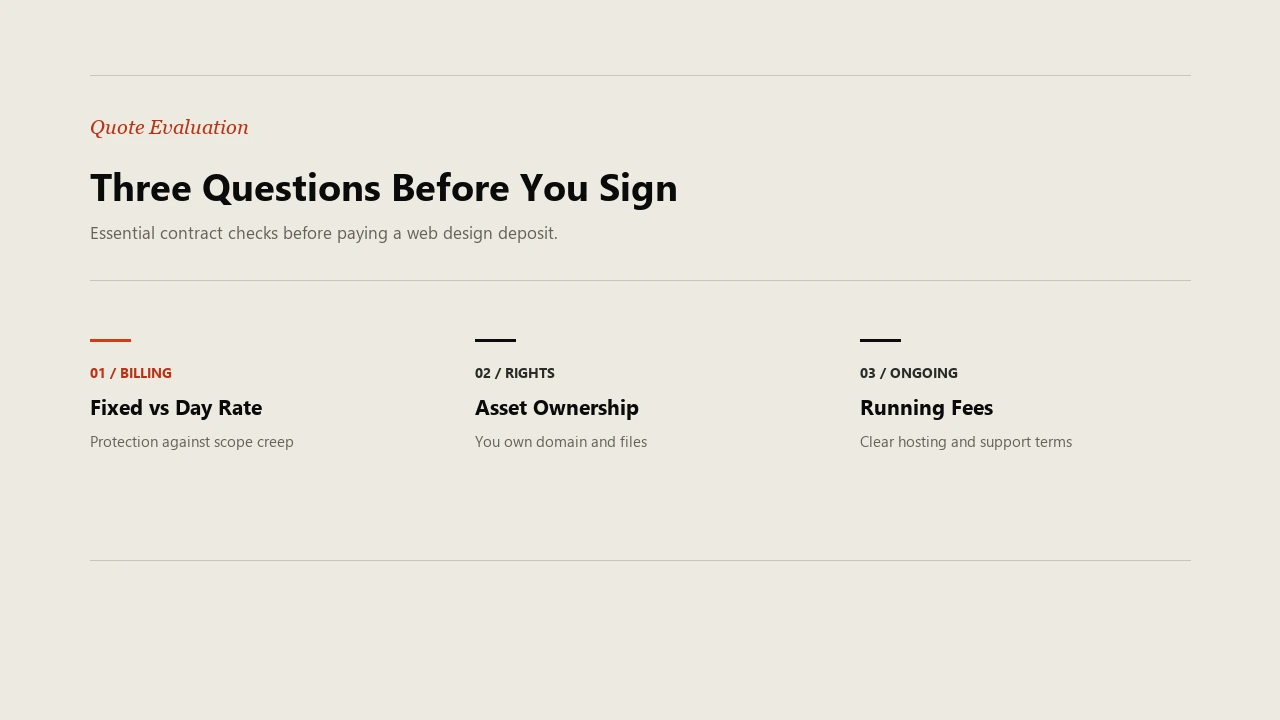
Before you pay a deposit, ask the designer these three things.
- Is this a fixed quote or an estimate? The agreement should state the page count, what you get, the turnaround and how many revision rounds are included.
- Who owns the site, domain and files when it's finished? Some agencies keep the design or register the domain in their own name. Get it in writing that everything transfers to you once the final invoice is paid.
- Which ongoing costs are compulsory? Check whether you can move hosting later, what updates cost and whether there is a fee for leaving.
How to plan your web design budget
If you are planning a new website or considering replacing an underperforming one, follow these practical steps to protect your capital:
- Start with your core commercial goal: decide whether your site exists primarily to generate phone calls, collect form leads, or process payments online.
- Keep your initial page count tight: launch with your homepage, about page, core service pages, and contact page before expanding into a sprawling blog archive.
- Confirm full site ownership: check that you own your domain name, your website files, and your content outright with no exit penalties if you ever move hosts.
- Check what maintenance entails: verify whether hosting, security patches, and minor text adjustments are covered, or whether you will be billed for every email you send.
To see how our build packages are structured from discovery to launch day, explore our website building process or use the calculator on our pricing page to model your project.
Need a website that works this hard?
We design fast, findable websites for UK small businesses. Clear pricing, no jargon.